




Four seconds after you tap “place order” on a delivery app, there’s a very specific little flicker of guilt that shows up. There was mince in the freezer. You own a working stove. Technically, you had time. Most marketers ignore that flicker completely and go straight for the feature list, which is a shame, because it’s worth more than almost anything else on the page. It’s the whole starting point of a decent emotional marketing strategy, and it’s exactly the kind of thing Ignite Search pays attention to when a brand’s messaging isn’t landing.
Most brands chasing convenience shoppers are still stuck selling logistics. Faster delivery, bigger range, cheaper fees, take your pick. It’s all useful, but none of it touches what’s rattling around in someone’s head right before they tap the button. A customer who feels a little sheepish about ordering in isn’t going to be swayed by 20% off. What actually works is a brand willing to say the awkward bit out loud first.
The Guilt Nobody Talks About
Convenience still has an image problem here. Ordering in on a Tuesday can feel like giving up a bit (even when it’s genuinely the sensible call after the day you’ve had). Brands that only talk about speed or price are fighting a logistics battle while ignoring the emotional tax the customer is quietly paying just to get there.
There’s some recent local research to back this up too. A 2026 consumer study by Retail Doctor Group found the biggest barrier to purchase for Australian shoppers isn’t price or product doubt; it’s guilt. A large share of consumers admitted they hold off buying because they’re not sure the purchase will feel justifiable once it’s done. That’s not a delivery-specific problem either. Gyms, meal kits, cleaning services, and pretty much anywhere a customer needs a bit of permission before they buy, run into the same thing.
Enter “Phew”
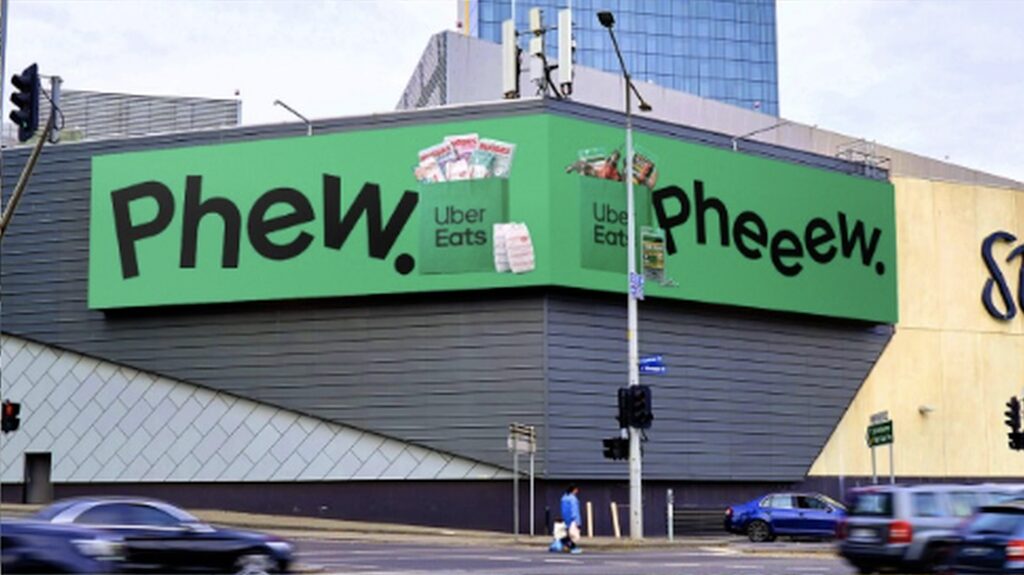
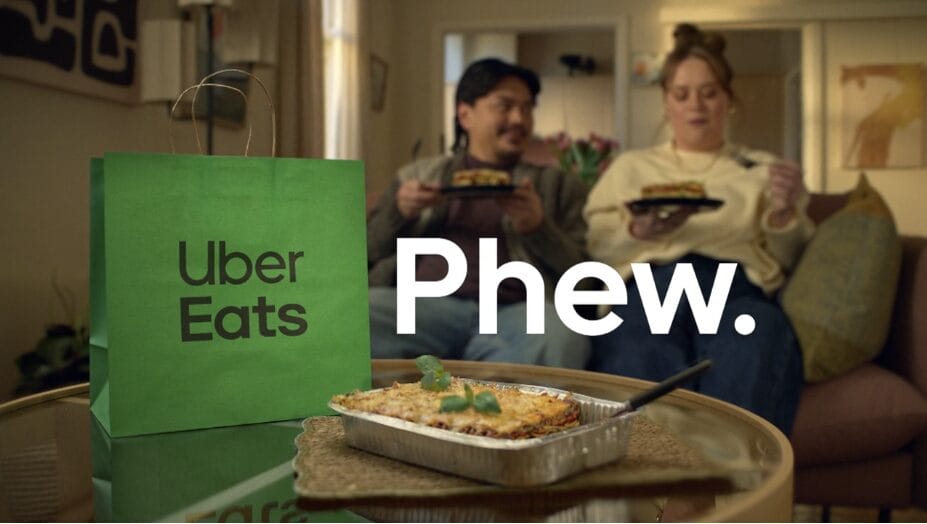
Uber Eats leans directly into that gap with its new Australian brand platform, “Phew,” built with longtime agency partner Special to replace the brand’s four-year run of “Get Almost, Almost Anything.” The launch film sends two characters, Sam and Ollie, back to 2013, an era the campaign calls “B.U.E.” (Before Uber Eats), complete with cameos from Redfoo and a young Troye Sivan, both battling traffic and empty pantries just to get dinner on the table.
From there the campaign spreads out across OOH, social and audio, leaning on smaller, everyday versions of the same relief, like a delivery turning up mid-DIY disaster right when you’ve realised you’re missing one crucial part.
Uber Eats ANZ marketing director Nicole Bardsley put it simply: the platform is tapping into “the emotional relief of this convenience.” The brand’s own research found that plenty of Australians still feel a bit guilty about paying someone else to do something they think they should be able to manage themselves, even with life getting busier every year. “Fast delivery” talks to someone still comparing apps. “Phew” talks to someone who’s already decided and just wants to feel okay about it.

That one word ends up doing a few things a features list never could:
- It names the feeling before the customer has to. Nobody’s typing “I feel bad about not cooking” into Google, but plenty of people are thinking it.
- It hands out permission instead of pressure. That reads a lot more like relief than a sales pitch.
- It turns the product into a mood rather than a transaction. That tends to stick around in someone’s memory long after they’ve forgotten how fast the delivery actually was.
This is close to something we’ve written about before when looking at why a queue outside a busy shop can do more convincing than an ad ever could: people rarely decide with facts first; they decide on feeling and fill in the facts later.
How to Borrow This for Your Own Brand
You don’t need a national ad budget for this. What you do need is to figure out the exact sentence your customer says to themselves right before they feel a bit bad about buying from you, which is exactly the kind of groundwork a proper content marketing strategy should start with, and then answer it head-on instead of ignoring it. A few real examples of how that might look:
- Meal kit or delivery brand: swap “Fresh ingredients delivered fast” for “Didn’t cook tonight? Neither did half of Perth. Dinner’s handled.”
- Cleaning or lawn care service: swap “Book your clean today” for “You didn’t ‘let it go.’ You just had better things to do this weekend.”
- Gym or personal training studio: swap a guilt-trip no-show reminder for “Skipped leg day? Half the gym did too. See you Thursday.”
- Bookkeeping or accounting service: swap “Outsource your BAS” for “Didn’t get to your own BAS this quarter? Smart move, that’s literally our job.”
- Furniture brand selling pre-assembled pieces: swap “Shop flat-pack alternatives” for “Bought it built instead of building it yourself? Congratulations on getting your Saturday back.”
None of those mention speed, price or range anywhere. Each one just names a specific, slightly embarrassing thought the customer already has, then gives them a socially acceptable reason to feel fine about it, and turning that thought into a line people actually stop scrolling for is where decent copywriting earns its keep.
A Quick Gut Check
Our team at Ignite Search would be the first to say guilt isn’t a theme every brand should reach for. If your product has nothing to do with self-indulgence or time pressure, forcing this angle is going to feel bolted on rather than believable, and customers can usually tell the difference. A scaffolding supplier doesn’t need a “Phew” moment. A meal kit, a beauty brand or a subscription service probably does. The emotion has to match something your customers actually feel, not whatever worked for a completely different category, and figuring out which emotional territory actually fits is a fair chunk of what our brand strategy work looks like before a single word gets written.
The real takeaway isn’t “say Phew” on your own website. It’s that customers are buying feelings well before they’re buying features, and the brands honest enough to say the quiet part out loud tend to earn more loyalty than the ones still promising to be fast.
If you’re ready to find the emotional hook sitting underneath your own product or service, get in touch with Ignite Search.