




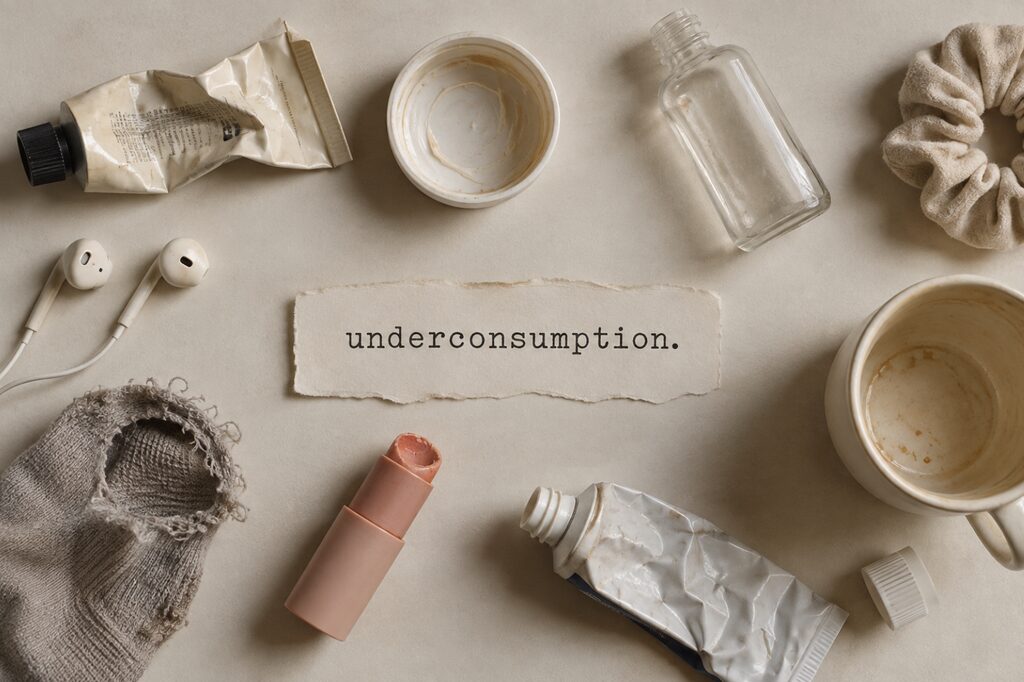
Someone holds up a moisturiser tube squeezed flatter than a pancake. Another shows off sneakers with a hole worn clean through the sole and covered in brush marks from cleaning. A third browses the bathroom shelf, one shampoo, one conditioner, nothing else, and says almost apologetically, “this is it; this is all I’ve got.” Underconsumption core has racked up tens of millions of views on TikTok, and here at Ignite Search it’s one of the more interesting shifts we’ve watched play out this year, mostly because it flips a script that’s run the same way for over a decade.
For years, the influencer playbook was volume. Bigger hauls, more product and a “get ready with me” that somehow involved fourteen skincare steps. Now the opposite is having its moment. People are filming themselves using things until they’re empty, wearing things until they fall apart, and treating restraint as the thing worth posting about.
It’s Not Really About Tidiness
At first glance, this looks like minimalism with better lighting, but it’s not really about a clean aesthetic. It’s tangled up with cost-of-living pressure, general exhaustion with being sold to constantly, and a quiet resentment towards influencer culture that made buying things look like a personality trait. Showing off a flat moisturiser tube instead of a fresh one isn’t really a style choice but a small act of defiance against years of being told the old one wasn’t good enough yet.
It also doesn’t behave like the trends brands are used to riding out. Deinfluencing, the one that came just before it, still pointed people towards other products to buy instead. This one mostly doesn’t bother. It just shows people using what they already own, which makes it a genuinely awkward trend for any business whose whole model depends on repeat purchases, frequent restocking, or convincing someone this season’s version is meaningfully better than last season’s.
Where This Actually Hurts
If your business relies on customers coming back often (think skincare, beauty, fast fashion, homewares, subscription boxes), this trend sits directly across from your growth model. It’s not personal. It’s not aimed at any one brand. It’s aimed at the entire idea that buying more is automatically good, and that’s a much harder thing to work around than a single competitor doing something clever. Usually it means going back to the brand strategy underneath the campaigns rather than tweaking the campaigns themselves.
The tempting move is to join in anyway, posting a “we love underconsumption too” video while everything else about the brand, the partnerships, the drops, and the countdown timers stays exactly the same. That’s a risky bet. People notice that mismatch fast, and no amount of clever copywriting is going to paper over it. A trend built entirely on quiet authenticity is about the worst one to fake, because faking it is the exact behaviour the trend exists to call out.
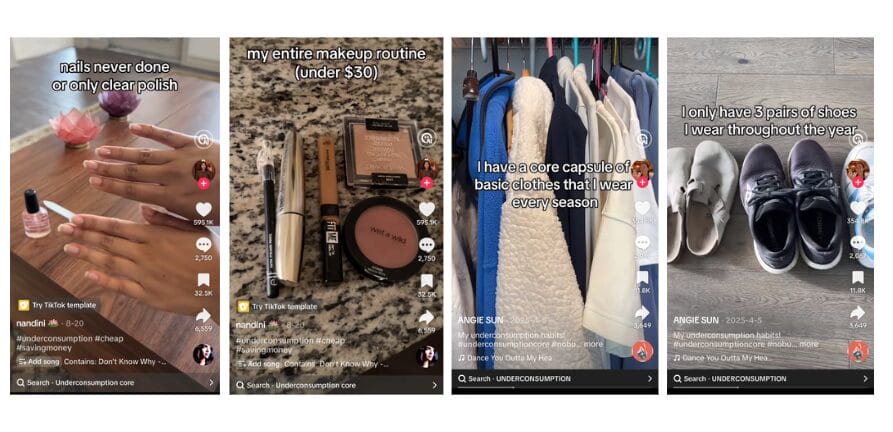
Images via @luckygirltheory and @angieonabudget on TikTok
What TikTok’s Own Numbers Say
TikTok’s official Next 2026 Trend Report supports this. It describes a shift the platform’s calling “Emotional ROI”, where impulse buying is steadily losing to intention. Shoppers are rewarding brands that justify the reason to buy before asking for the sale, instead of brands leaning on urgency or scarcity to force a decision.
That’s not just a TikTok thing either. It’s the same instinct sitting underneath the underconsumption core, just measured at a platform scale.
For a brand built on volume, none of that has to be bad news. It’s really a signal to change what’s actually being sold, which is usually a content strategy conversation before it’s a content calendar one. A product doesn’t need to be bought constantly to matter. It needs to be bought for a reason that holds up, which is a very different brief than “post another haul”.
What Might Actually Work Instead
A few concrete ways to respond to this shift:
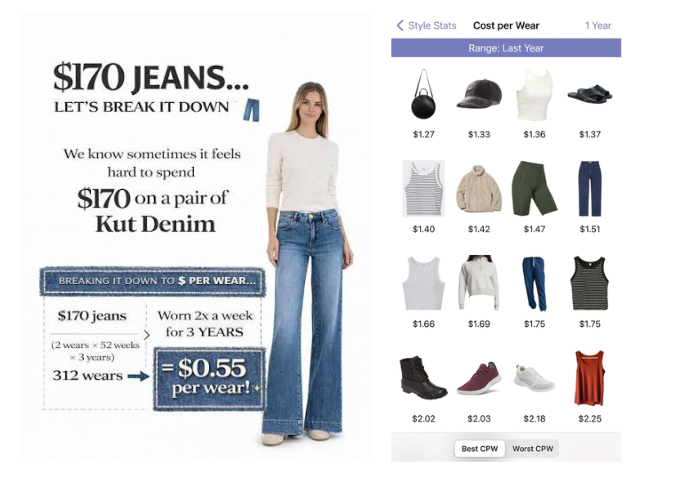
- Put cost-per-use or cost-per-wear numbers next to the price. A $120 jacket worn 200 times costs 60 cents a wear, and that’s a much stronger sell than the price tag alone.
- Build a repair, refill or trade-in option if the product allows for it. Even a simple refill pouch or a repair guide signals the product is meant to last, not get replaced.
- Let real customers show ongoing use across social media rather than unboxing the newest thing. A “still using this two years later” post from an actual customer does more work than a fresh unboxing ever will.
- Answer the “why do I actually need this?” question in the product copy itself, before someone has to ask. If that answer is thin, that’s worth knowing before the campaign goes out, not after.
- Reward loyalty and longevity instead of first-time purchases. A discount timed to when someone’s actually due for a repurchase feels a lot more thoughtful than a flash sale blasted out to everyone on the list.
Where This Probably Goes Next
Trends like this don’t really disappear so much as they get absorbed. In a year or two, “underconsumption core” as a hashtag will probably fade, but the scepticism behind it won’t. Shoppers who’ve spent a year rewarding restraint over hauls aren’t going to snap back to trusting hype the moment the next aesthetic takes over. The brands still standing by then will be the ones that treated this as a shift in what people expect, not a phase to wait out.
If you want help working out how your brand holds up under that kind of scrutiny and what to change if it doesn’t yet, get in touch with Ignite Search.