






You are walking past two dessert shops. One is nearly empty. The other has a queue stretching down the footpath. You have never tried either one, but the busy shop already feels like the safer choice. Why is that? At Ignite Search, we see this as social proof marketing in one of its clearest forms: people looking at what everyone else is doing to decide what deserves their attention.
Of course, a queue cannot rescue a disappointing product. Messina, Pop Mart, ButterBoy and Yo-Chi attract crowds because people genuinely enjoy what they offer. Good products create the demand first. Things become more interesting when that demand is visible to everyone walking past. A line can turn popularity into curiosity, curiosity into urgency and a quick dessert run into a surprisingly serious time commitment. Here is how these brands turn genuine customer enthusiasm into something that attracts a following.
Messina’s Queue Answers the First Question
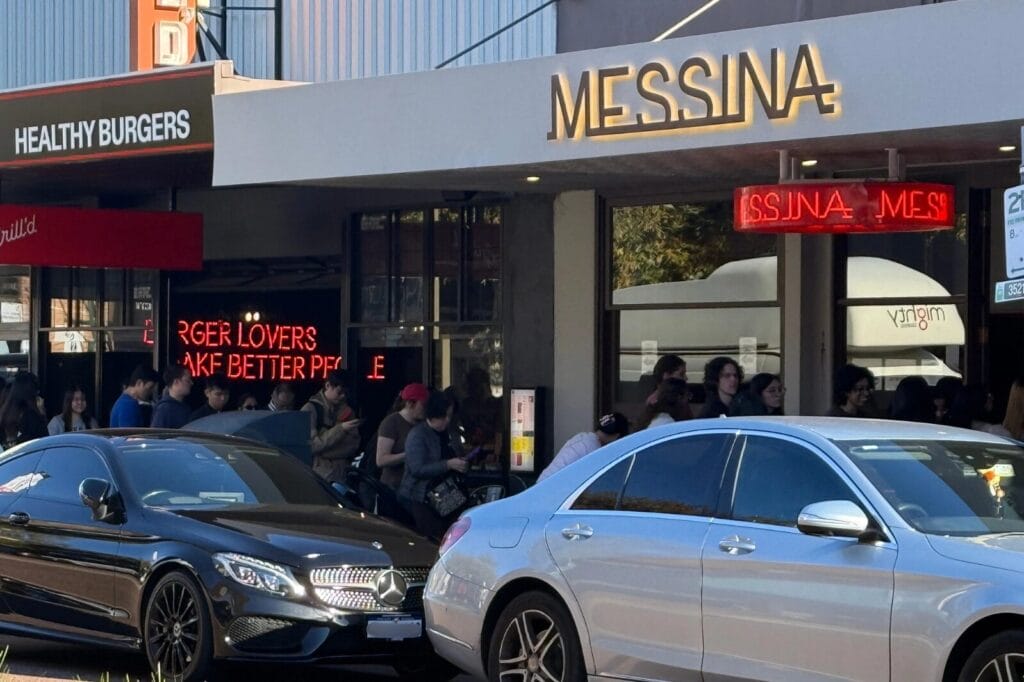
Our Perth team knows this particularly well. Gelato Messina sits almost directly across the road from Ignite Search’s East Victoria Park office, so we have seen the queues form firsthand, especially during “Messina Mondays” or when a new weekly special drops.
For someone discovering Messina for the first time, that line answers the question before they have even studied the cabinet: Is this place actually any good? The queue cannot guarantee they will love the gelato, but it removes some of the uncertainty. Plenty of other people have already decided it is worth stopping, waiting and possibly changing their flavour choice three times before reaching the counter.
When customers are unsure, visible demand makes the first visit feel less like a gamble. The crowd does not create Messina’s reputation, but it makes that reputation very difficult to miss.
Pop Mart Makes Waiting Feel Urgent
At Pop Mart, the queue communicates more than popularity. It also suggests that whatever people are waiting for might disappear before everyone gets a turn.
Limited releases, collectable characters and blind boxes make the purchase uncertain from the beginning. Customers may not know which figure they will receive, how much stock is available or whether the product will still be there tomorrow. Every person ahead of them becomes another possible buyer of the last box.
A few things begin happening at once:
- The crowd confirms that the product is in demand.
- Limited stock makes postponing the purchase feel risky.
- Time already spent waiting makes leaving feel wasteful.
- Seeing other customers buy several boxes increases the pressure.
You may join the queue out of mild curiosity. Twenty minutes later, the person buying six boxes ahead of you has somehow become your lifelong enemy.
For marketers, this is where social proof and scarcity begin working together. The queue tells customers that other people want the product, while limited availability gives them a reason to act now. The scarcity needs to be genuine, though. Customers tend to notice when every product has been on its “final release” for the past four months.
ButterBoy’s Queue Begins on Your Phone
ButterBoy’s physical queue often starts online. Its thick, generously filled cookies are well suited to close-up videos, especially the familiar shot where someone slowly breaks one apart to reveal the centre.
A customer might see the cookie on social media several times before visiting a store. When they finally arrive and find people waiting for the same product, the online attention suddenly has physical evidence. It is no longer just a well-edited video. Other customers have left home and joined the queue for it.
This creates a cycle that keeps on building:
- Photos and videos create curiosity.
- Curious customers visit the store.
- The busy store gives those customers more content to capture.
- Their posts introduce the product to another group of people.
Food for thought: The product still needs to live up to the content. A dramatic video may persuade someone to visit once, but the cookie decides whether they return. The useful lesson here is that social proof becomes more convincing when customers encounter it in several places. Online attention, word of mouth and visible demand can support one another rather than operating as separate marketing efforts.
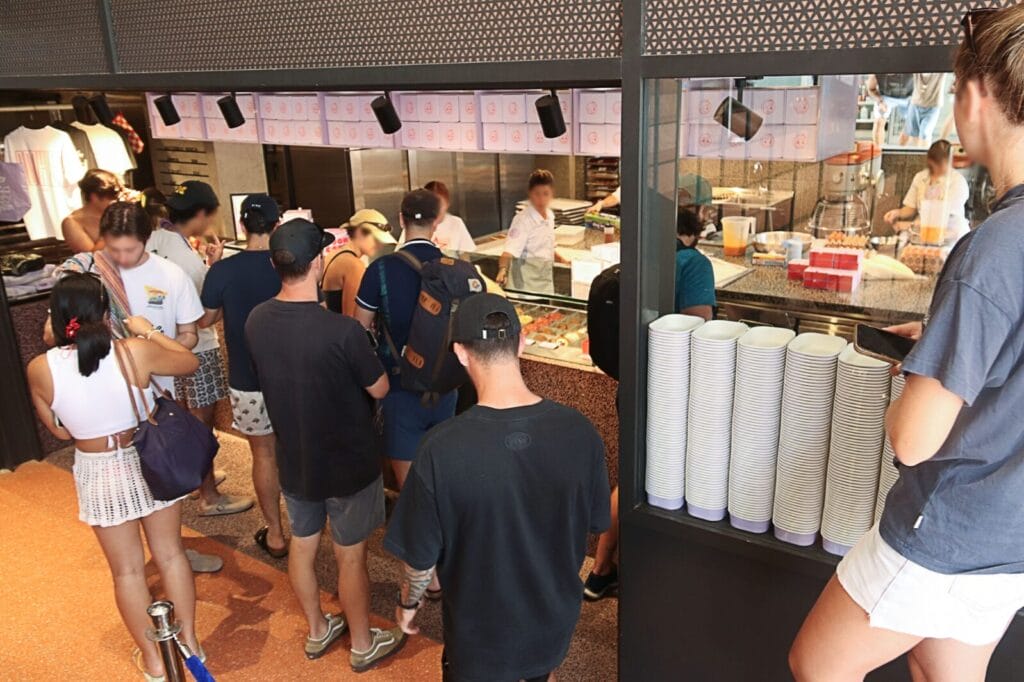
Image via bestspots.com.au
Yo-Chi Makes the Wait Part of the Experience
Waiting tends to feel longer when there is nothing to do except stare at the person ahead and wonder why they still have not decided.
Yo-Chi avoids some of that frustration because customers can watch other people build their desserts. Someone creates a sensible cup of frozen yoghurt, fruit and granola. The next person constructs a small mountain of brownie pieces, cookie dough and sauce that appears to require council approval.
The line gives customers time to inspect the toppings and plan their own combinations before reaching the machines. That changes the wait from dead time into part of the experience. It also reinforces the social side of the brand. People visit in groups, compare bowls and sit together afterwards, so a busy venue feels appropriate rather than inconvenient.
For other businesses, the point is not that every queue needs a toppings bar. It is that waiting feels easier when customers have information, movement or something interesting to watch. Menus, visible preparation, product displays and regular updates can all stop a short delay from feeling much longer than it really is.
When the Queue Starts Working Against You
Not every queue is good marketing. A line outside a popular dessert shop on a warm evening can suggest that something enjoyable is waiting at the front of the line. A line at a checkout while one overwhelmed employee restarts the payment terminal for the third time tells a different story.
Customers tend to accept a wait when they understand why it exists, can see that the line is moving and believe the result will justify their time. Without those signals, visible demand quickly starts looking like poor planning.
Businesses managing a queue should pay attention to a few basics:
- Make progress visible. A long line feels manageable when it continues moving.
- Set expectations. Tell customers when stock is limited, or delays are longer than usual.
- Keep the process fair. Nothing tests community spirit like someone quietly skipping to the front.
- Give people something useful to do. Menus, demonstrations and samples make the wait feel connected to the purchase.
- Respect the customer’s time. Popularity does not excuse an unnecessarily difficult experience.

The Crowd Has Already Said Something
Most customers will never tell you that a queue, a review or a packed store influenced their decision. They will simply say, “I kept seeing it everywhere,” or “Everyone seemed to be going there.” By then, the brand has already passed an important test: it feels known.
That is why customer enthusiasm should not stay hidden. The stories people share, the photos they post and the reasons they return can do more than celebrate a good product. They can help the next customer feel confident enough to try it for themselves.
Ignite Search can help you turn those everyday signs of customer interest into marketing that feels credible, visible and worth acting on. Get in touch with our team today to learn more!