




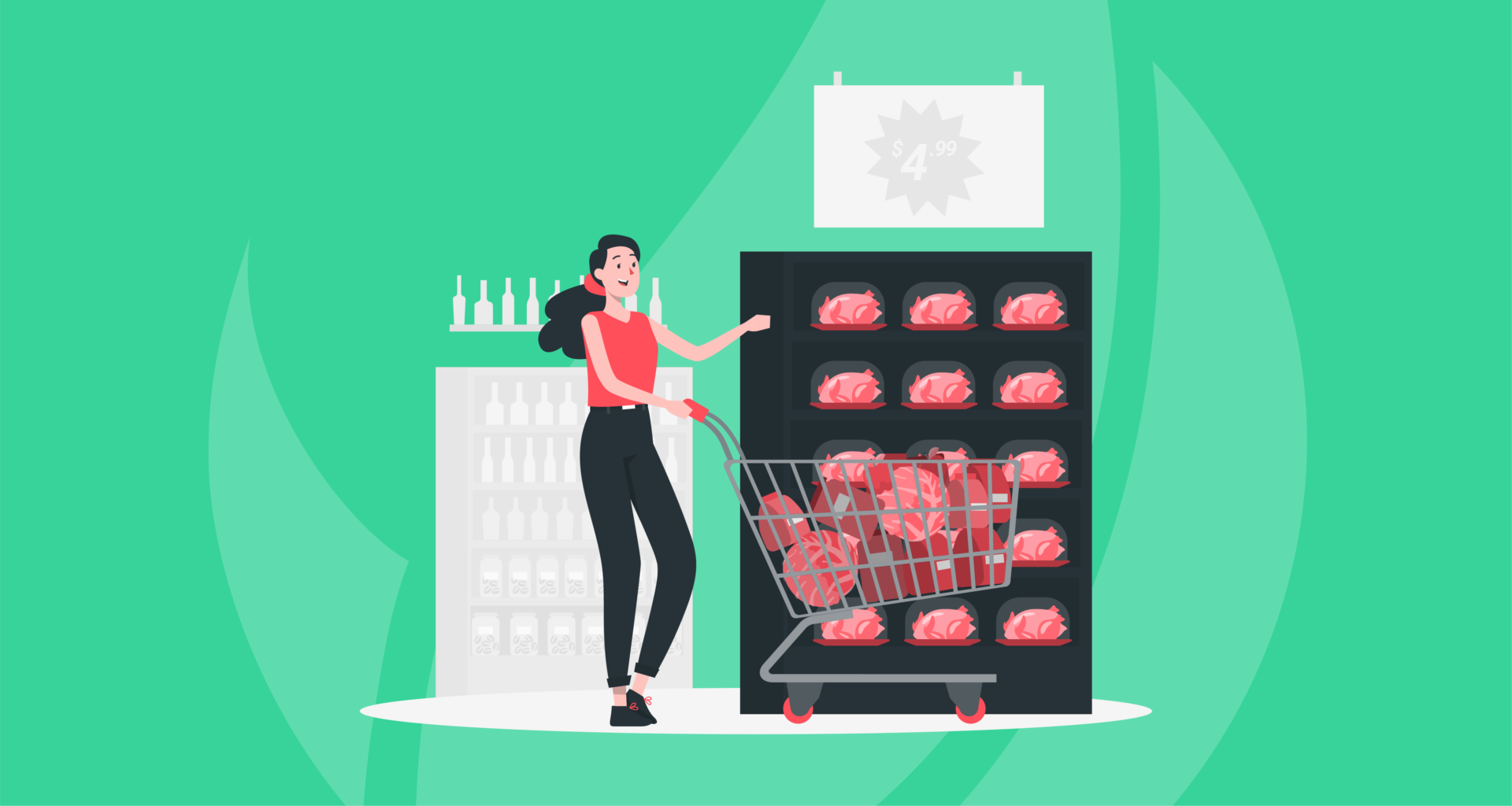
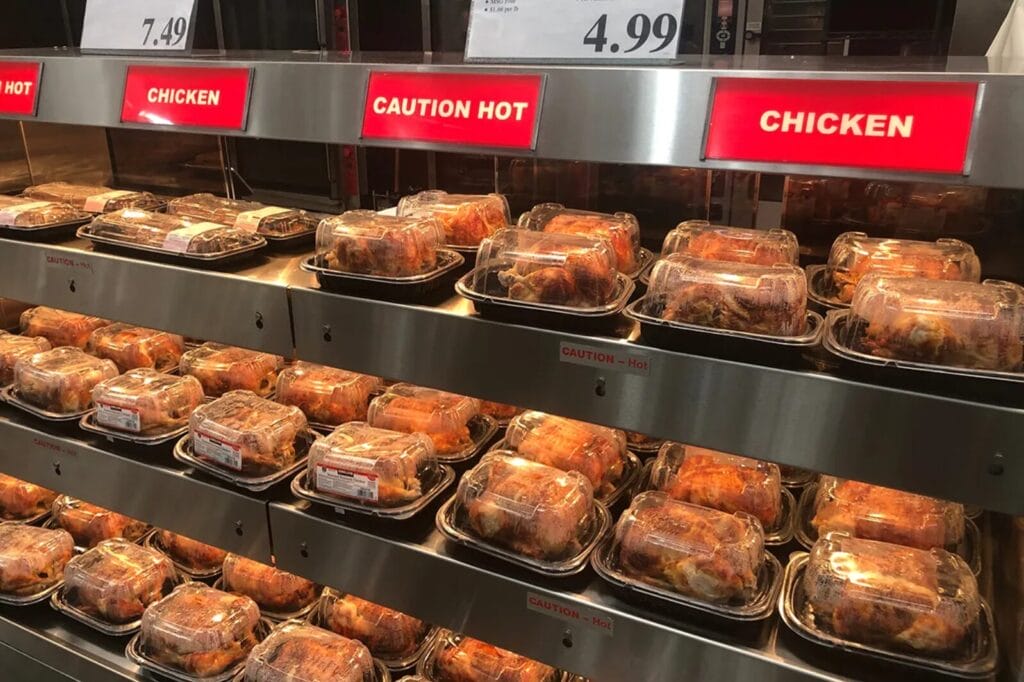
Nobody walks into Costco intending to buy a kayak, a three-kilogram tub of pretzels and enough toilet paper to survive a minor apocalypse. Yet somehow, these things end up in the trolley. The trip may have started with something much simpler: a rotisserie chicken. Costco’s famous chicken has held its US$4.99 price despite rising production and food costs. It is such a recognisable bargain that shoppers make a special trip for it, then pass hundreds of other products before reaching the counter. Our team at Ignite Search sees this as a clever example of how a loss leader strategy can turn the cheapest product in the building into the starting point for a much larger purchase.
And this is not unique to Costco. IKEA has its hot dogs and meatballs, while Bunnings has the weekend sausage sizzle. So why do some of the world’s biggest retailers invest so heavily in products that seem almost unrelated to what they actually sell? Let’s take a closer look.
The Chicken Is Waiting at the Back
Costco could place its rotisserie chickens near the entrance. It would be convenient, efficient and helpful for anyone rushing in to grab dinner. Instead, shoppers generally have to travel through much of the warehouse to reach them.
Along the way, they pass televisions, outdoor furniture, clothing, appliances, snacks and the constantly changing collection of products Costco members did not know existed until that exact moment. A customer who came in for one chicken may leave with a trolley full of items that carry healthier margins.
The chicken does not need to generate a large profit on its own. Its role is to give members another reason to enter the warehouse and reinforce the idea that Costco offers unusually strong value. Costco sold more than 157 million rotisserie chickens worldwide in 2025, according to figures reported from the company’s annual meeting.
That scale tells us something. Shoppers are not treating the chicken as an occasional promotion. It has become part of what they expect Costco to be.
A Bargain Sets the Tone
Customers rarely know the cost price of a television, sofa or power tool. There are too many models, specifications and competing brands to make an instant judgement.
A hot dog is different…
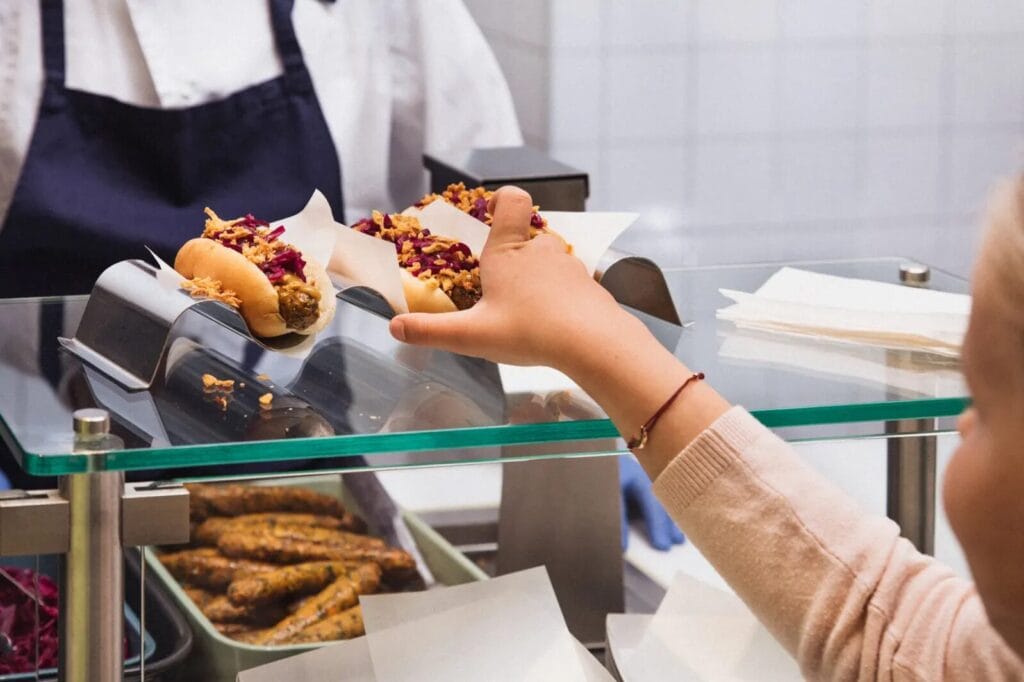
Most people have a rough idea of what one should cost. When IKEA sells a hot dog for far less than expected, it creates an immediate impression that travels beyond the food counter. If the hot dog is this affordable, perhaps the shelves, lamps and storage units are good value too.
IKEA introduced its low-priced hot dogs in the 1980s. The company later began using the term “hot dog” internally to describe products with an unexpectedly low price, showing how deeply the idea became tied to its approach.
The food also changes the rhythm of the shopping trip. IKEA stores are large (we swear every visit somehow turns into a full afternoon expedition), and choosing furniture takes time. A restaurant halfway through gives tired shoppers somewhere to pause. The bistro at the end offers one final inexpensive treat before they leave, and IKEA itself describes these spaces as places to recharge during or after shopping.
Bunnings Does Not Sell the Sausages
On a Saturday morning in Australia, the smell outside Bunnings can be as recognisable as the green and red sign above the entrance.
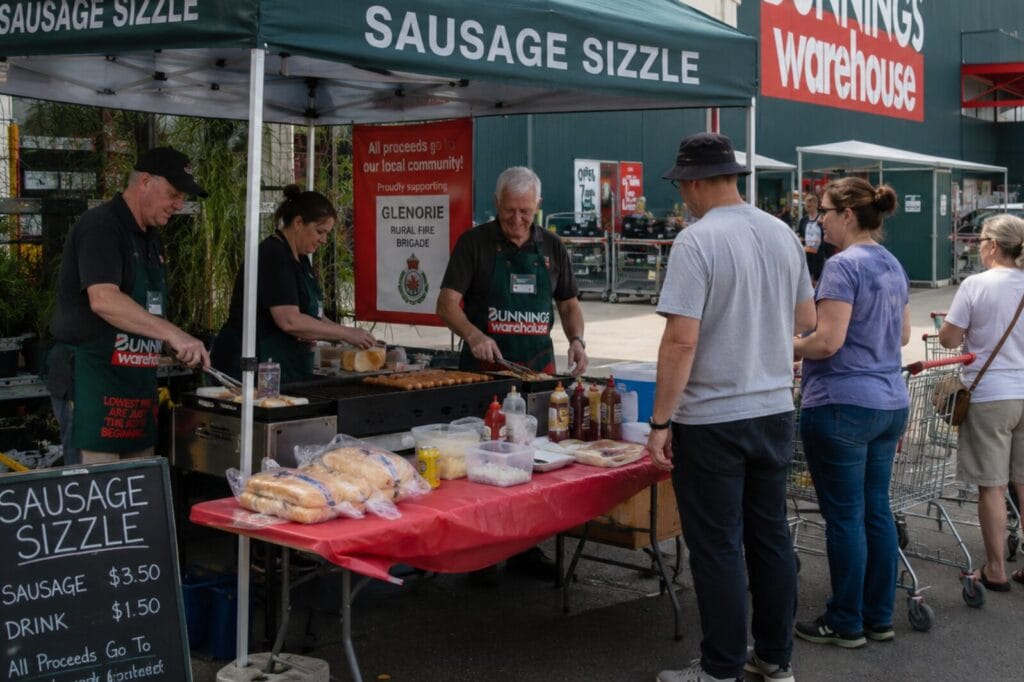
The Bunnings sausage sizzle snag works differently from Costco’s chicken or IKEA’s hot dog. Bunnings does not run the barbeque as another retail department. Local schools, sports clubs, charities and other not-for-profit groups organise the sizzles to raise money, with support from the store. For more than 25 years, the program has helped community groups fund their work.
From a customer’s perspective, though, the snag has become inseparable from the Bunnings trip. People joke about visiting for a snag and accidentally leaving with potting mix, paint brushes and a new drill (and vice versa). Children remember the food. Adults recognise the weekend ritual. Community volunteers become part of the atmosphere outside the store.
The sausage sizzle snag gives Bunnings something a national advertising campaign cannot easily recreate: a genuinely local presence.
Cheap Does Not Always Mean Discount
Costco, IKEA and Bunnings are not simply lowering prices across everything they sell. They have each become associated with a particular low-cost experience that customers can easily understand and retell. People remember the Costco chicken because its price has remained remarkably stable. They mention the IKEA hot dog because it feels unusually cheap. They talk about the Bunnings snag because it has become part of the weekend visit.
These products act as evidence.
A slogan might claim that a company offers value, but a cheap meal lets the customer experience that value immediately. The amount is small enough to feel low risk, while the story is memorable enough to repeat.
This is why randomly discounting products rarely has the same effect. A temporary 20% reduction may create urgency, but it disappears once the campaign ends, while an enduring bargain can become part of the brand’s identity.
What Makes a Good Loss Leader?
A useful loss leader needs a purpose beyond being cheap. It should do at least one of the following:
- Bring more people through the door
- Introduce customers to the quality of the business
- Encourage them to stay longer or explore more
- Lead naturally towards a paid product or service
- Give people a reason to come back
For a service business, the equivalent may not be a physical item. It could be a free consultation that answers one immediate question, a practical template people can use straight away or a workshop that gives potential clients a genuine sense of the company’s expertise.
The connection matters. A free offer may attract attention, but it will do little for the business if the people claiming it have no reason to return or consider the paid service.
The Cheapest Item Can Carry the Biggest Message
We wrote this article because these offers are easy to dismiss as little more than cheap food or a clever promotion. But look a little closer and they reveal something much more useful: sometimes the smallest purchase is what gets a customer through the door, keeps them there longer and changes how they feel about the entire business.
That is the part worth paying attention to. A loss leader does not have to make much money on its own. It simply needs to make the next step feel easier, whether that means browsing another aisle, trying a service or coming back again later.
If your offers are generating interest but not leading customers anywhere meaningful, Ignite Search can help you build a strategy that turns that first interaction into something more valuable. Get in touch with our team today.