





ou know that moment when a character walks into a Marvel film and half the cinema gasps while the other half quietly wonders who they are? That mix of recognition, curiosity and mild confusion is part of what has kept the Marvel Cinematic Universe going for so long. Our team at Ignite Search thinks there is a useful lesson here for any business working on an integrated marketing strategy. Marvel gives each film its own story, but still leaves enough links, references and unfinished threads to pull people towards the next one.
Most businesses are already creating content across several places. There are blogs, social posts, email campaigns, ads, service pages and the occasional downloadable guide. The problem is that these pieces often feel unrelated. Today, we’re unpacking how Marvel gives every film, series and character a distinct role while keeping them connected to one larger story, and how businesses can use the same approach to make their content, campaigns and digital channels work better together.
One Small Scene Made People Stay
When Iron Man was released in 2008, it worked perfectly well on its own. Tony Stark built a suit, made several poor decisions and caused enough property damage to keep insurers busy for years.
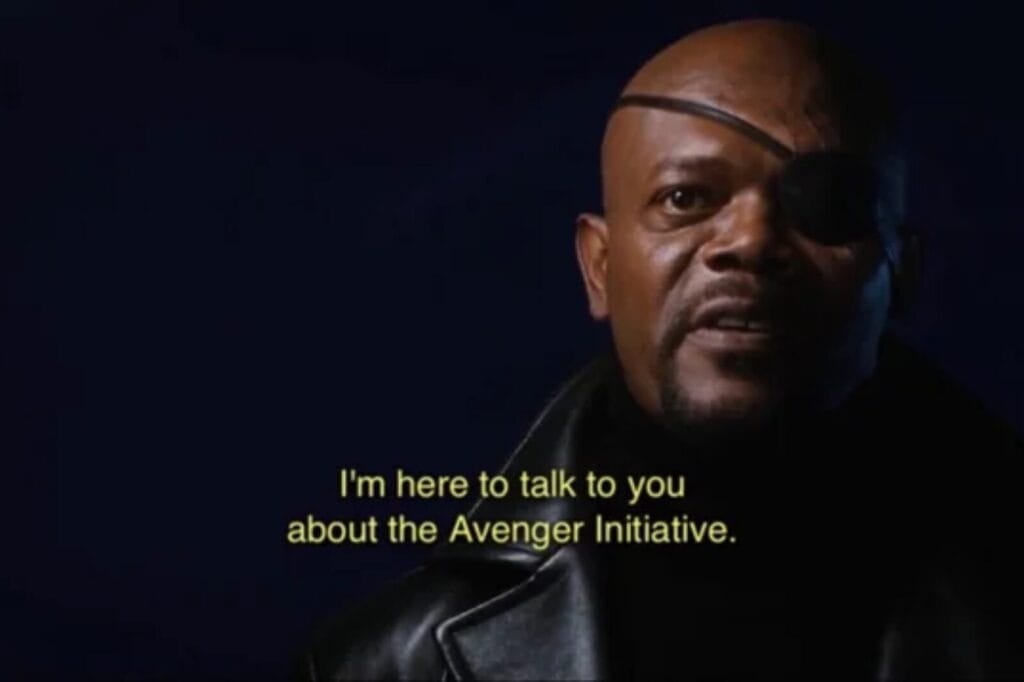
Then Nick Fury appeared after the credits and mentioned the “Avenger Initiative”.
The scene lasted less than a minute, but it gave audiences a reason to wonder what would happen next. It did not interrupt the film or leave the main story unfinished. It simply opened another door.
That is a useful way to think about marketing content. A blog can fully answer one question while guiding the reader towards a related service. A social post can make sense by itself while introducing an idea that continues in an email or video. The first piece should still feel complete, but there should be an obvious next step for anyone who wants more.
Different People Need Different Ways In
Not everyone became a Marvel fan through the same character. Some people liked Iron Man because he was funny and technologically impressive. Others preferred Black Panther, Thor, Spider-Man or the Guardians of the Galaxy. A person could enjoy one corner of the franchise without being equally interested in all the others.
Businesses also speak to customers with different needs, levels of knowledge and amounts of patience. Someone may want a detailed guide. Someone else wants a 30-second video because they are reading on their phone while waiting for coffee. Another person may be ready to compare prices and make contact.
That is why an integrated campaign may need several entry points:
- A short social post that introduces the idea
- A blog that explains it properly
- A case study that shows the result
- An email that brings the key points together
- A landing page for people ready to act
The pieces do not need to sound identical. They just need to feel like they came from the same business and lead people in the same general direction.
Regular Customers Notice the Little Things
Marvel fans are trained to watch for tiny details. A familiar object appears in the background. A line from an earlier film returns, a character turns up for 20 seconds, and suddenly the internet has enough material for three weeks of theories.
That kind of recognition can be enjoyable for customers too.
A brand might bring back a visual from an earlier campaign, continue a running joke, revisit a popular topic or refer to something its audience already knows. These small callbacks make regular followers feel included because the brand seems to remember what came before.
The important part is making sure newcomers are not left behind. A recurring reference should add something for loyal customers, not force everyone else to sift through six months of Instagram posts to understand it.
Think of it like seeing a friend across a crowded room. Recognition is nice. Being handed a folder of backstory is less so.
Build-Up Only Works When Something Is Coming
Marvel spent several films introducing its main heroes before bringing them together in The Avengers. By then, audiences already knew their personalities, rivalries and problems. The crossover felt exciting because there was something to pay off.
Brands often love the idea of a build-up. They post countdowns, crop images mysteriously and announce that something “big” is coming. Then the reveal is a new brochure or a discount that could have been explained in one sentence.
A strong build-up usually gives the audience something new at each stage:
- A clear theme from the beginning
- Useful details released over time
- Behind-the-scenes content that adds context
- A launch, event or offer that brings everything together
- A clear next step once the reveal happens
The golden rule: If you are asking people to keep watching, the final moment needs to justify the attention.

Do Not Make New Customers Study First
Marvel’s connected universe has one obvious weakness: joining late can feel like homework.
A new viewer may want to watch one film, only to be told they should first watch four earlier films, two television series and a post-credit scene involving a glowing cube. That is a lot to ask from someone who was only looking for something to watch on a Friday night.
Businesses can create the same problem online. A visitor lands on a service page and finds unexplained terms, references to old campaigns and links that assume they already understand the company. Instead of feeling interested, they feel as though they have arrived halfway through a conversation.
Every important page or campaign should provide enough context to make sense on its own. Internal links can offer more detail, but they should support the current page rather than compensate for missing information. A customer should be able to start anywhere and still understand what you do, who it is for and what they should do next.
Your Marketing Should Feel Like It Knows Itself
This is where many businesses run into trouble… A company publishes a blog about one topic, posts something unrelated on social media, runs an ad with a different message and sends people to a landing page that looks as though it belongs to another business. Each piece may be fine on its own, but together they feel disconnected.
An integrated marketing strategy gives those channels a shared direction:
- Social media attracts attention
- Blog content develops the idea
- Email keeps it moving
- Paid advertising reaches the right audience
- Landing pages turn interest into action
- Remarketing brings people back when they are ready
That does not mean posting the same caption everywhere. Marvel does not release the same film five times with different titles. Each part should add something useful while still belonging to the same campaign. As we explored in our article on the top marketing trends for 2025, omnichannel marketing works best when each platform continues the journey rather than starting a completely different conversation.

Give People a Reason to Keep Going
Marvel’s biggest strength is not simply that everything connects. It is that those connections make people curious about what comes next. That is where businesses can learn the most.
If your blogs, ads, emails and website currently feel like separate stories, Ignite Search can help connect them into a more coherent integrated marketing strategy. Get in touch with our team today.