





Every successful product feels obvious in hindsight. Of course, people reach for an energy drink before a workout. Of course, engagement rings have diamonds. Of course, booking a stranger’s spare room can feel like a perfectly normal holiday plan. Except… none of those ideas felt obvious when they first appeared. Someone had to explain them, frame them and repeat them until the world stopped questioning them. That is what makes market creation strategy fascinating. At Ignite Search, we regularly speak with businesses that assume demand must already exist before marketing can work. History suggests otherwise.
In Part 1, we explored how brands turned everyday behaviours into habits. This time, we are zooming out. Before a habit can form, the product has to make sense. The problem has to feel real. The behaviour has to feel safe, useful or socially acceptable. Here is how some of history’s smartest marketers pulled it off.

What If Everyone Else Could Tell?
Have you ever walked away from a conversation and suddenly wondered whether your breath smelled? There is no reliable way to check without asking someone, and most of us would rather not. That small moment of uncertainty is exactly what made Listerine’s early advertising effective.
Bad breath existed long before mouthwash. What changed in the 1920s was the way people were encouraged to think about it. Listerine advertising helped turn “halitosis” from an occasional inconvenience into a hidden social threat. Campaigns showed people losing romantic opportunities or being quietly rejected because of a problem they did not know they had. The Smithsonian notes that Listerine’s marketing transformed bad breath into an embarrassing condition that appeared to require urgent treatment.
Listerine was not simply saying, “Our mouthwash works.” It was asking, “What if everyone notices something you cannot?” Once that doubt took hold, the product became a form of social protection.
De Beers Sold the Moment.
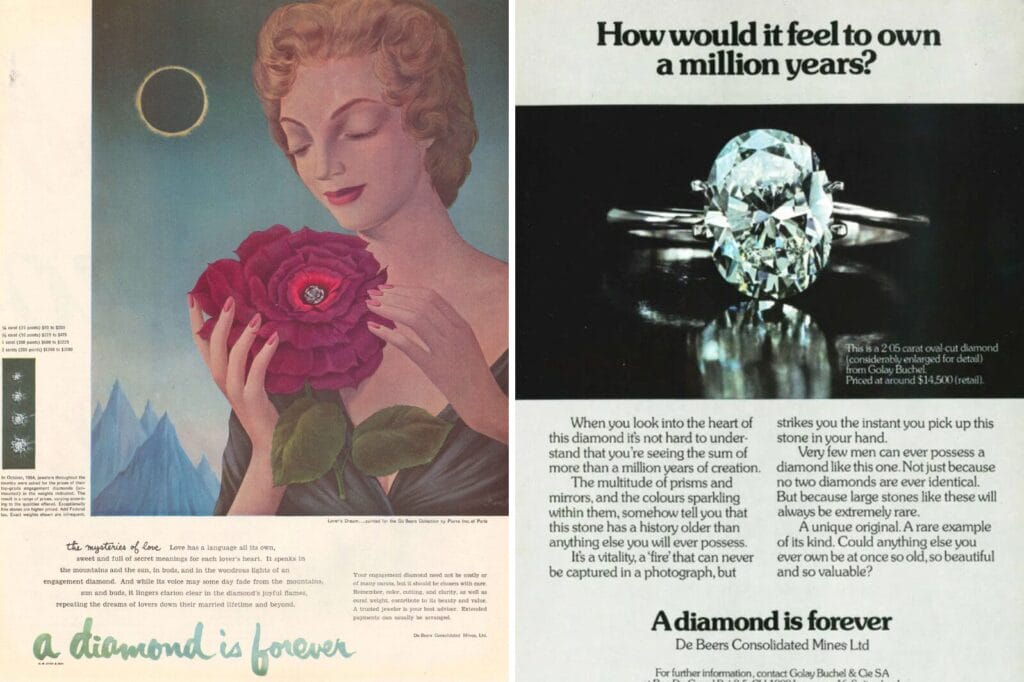
Try picturing a marriage proposal without a diamond ring. It doesn’t feel wrong, exactly, but it probably feels a bit incomplete. That reaction isn’t the result of some ancient, universal tradition; it’s the result of remarkably persistent marketing.
When diamond demand plummeted during the Great Depression, De Beers hired the ad agency N.W. Ayer to give the stones a deeper emotional weight. The breakthrough came in 1947, when copywriter Frances Gerety penned four simple words: “A Diamond Is Forever.”
It became one of the most recognisable slogans of the 20th century because it perfectly fused the physical permanence of the stone with the emotional promise of marriage. That is the true power of symbolic marketing: once a product represents something far bigger than its raw materials, it becomes immune to price comparisons.
For brands today, the takeaway isn’t about figuring out how to make a product sound more luxurious. It’s about asking: “What moment does our product help someone express?”
Nobody Was Asking for an Energy Drink.
If someone hands you a Red Bull late at night, you already know what they’re saying. Keep going. Stay awake. That feels completely normal today, but before Red Bull launched in Austria in 1987, “energy drinks” were barely a category in the Western world. The drink was smaller than a typical soft drink, more expensive, and had a taste that many people found unusual. Instead of changing the product to fit the market, Red Bull changed the market to fit the product.
Rather than competing with cola or sports drinks, Red Bull created an entirely new reason to buy.
- It wasn’t a soft drink. It was fuel.
- It wasn’t about flavour. It was about performance.
- It wasn’t for lunch. It was for late nights, long drives, study sessions and extreme sports.
A useful exercise for any business is to finish this sentence: *“*People should think of our product whenever they are about to __________.”
If that sentence is difficult to complete, your marketing may have a positioning problem rather than a product problem. Customers might understand what you sell, but they still don’t know when it belongs in their lives.
The Biggest Barrier Wasn’t the Price.
Think back to the first time you booked an Airbnb. Were you completely comfortable with the idea? Or did you spend a few extra minutes reading reviews, checking photos, and wondering whether you’d made the right choice?
That hesitation was completely normal. Twenty years ago, the idea of paying to stay in a stranger’s spare room sounded risky at best. Hotels already existed, so why would anyone choose to sleep in someone else’s home?
Airbnb knew it couldn’t solve that problem with a catchy slogan. Before it could sell accommodation, it had to sell trust. Every feature on the platform had a purpose:
- Guest reviews answered, “Can I trust this host?”
- Photos helped people picture themselves staying there.
- Direct messaging made hosts feel like real people, not anonymous strangers.
- Secure payments reassured guests that someone had their back if things went wrong.
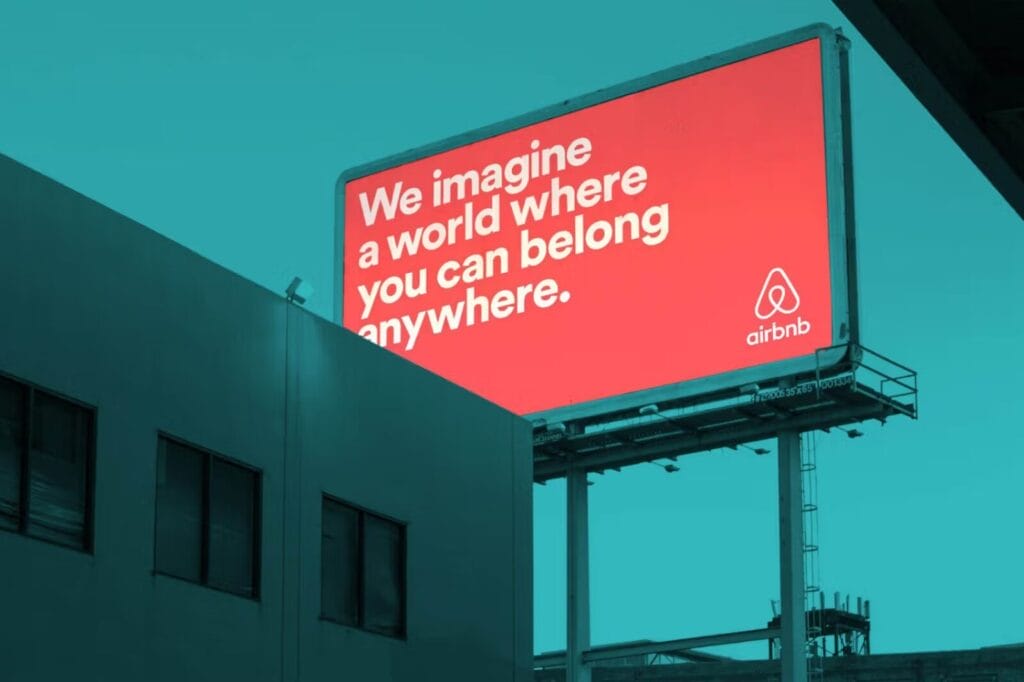
Only once that trust existed did Airbnb introduce a bigger idea: Belong Anywhere. Suddenly, booking an Airbnb wasn’t just about finding somewhere cheaper to sleep. It became a more personal, local, and authentic way to experience a destination.
The Bigger Lesson
At first glance, these stories couldn’t be more different. One sold mouthwash, another sold diamonds, another created an entirely new drinks category, and another convinced millions of people to stay in strangers’ homes.
But they all have one thing in common: they changed the way people thought before they changed the way people bought.
The good news is you don’t need the budget of Red Bull or Airbnb to apply the same thinking. Start by asking yourself:
- What belief does a customer need to have before our product makes sense?
- What moment in their day should instantly remind them of our brand?
- What hesitation is stopping them from taking the first step?
- Are we selling features, or are we helping customers understand why those features matter?
Often, the biggest barrier to growth isn’t your product; it’s your audience’s current mindset.
Before the Sale Comes the Shift
The funny thing about great marketing is that you rarely notice it while it’s happening. Years later, it simply feels like that’s the way things have always been.
Most brands won’t create the next Red Bull or Airbnb, and they don’t need to. But every business has the chance to reshape the way its customers think, even if it’s only within its own industry. Sometimes, that’s all it takes to stand out.
If you’re looking for fresh ways to position your brand, challenge assumptions and create marketing that people actually remember, we’d love to help. Get in touch with the Ignite Search team today.