





“Australian ads have turned bolder, cheekier and stranger over the past three years. The weird ads are not a coincidence and they are not technically a crisis. They are a rebellion against a market that all sounds the same.” – Cheech Foo
Anyone who has sat through an ad break lately, watched a YouTube ad and quietly wondered if Australian advertising had lost the plot can relax. It has. Deliberately. Why? Because AI cannot copy what makes us human, and the weirder the better. Not that this is out of character for Australians. We are a weird mob, and we love it.
Plenty of people find it irritating, and that is part of the point. In fighting the “sea of sameness” and proving there is a real human behind the keyboard, brands are resorting to bizarre humour, weirdness or sass; basically the things AI would never logically generate. It is happening across fashion, music, design and culture. When everything starts looking and sounding the same, being a little weird is how a brand proves it is human.
So let’s take a deep dive into the weirdness of Australian ads.
The evidence has been piling up in the ad breaks
Once spotted, it is difficult to unsee. A quick tour of the past two years:
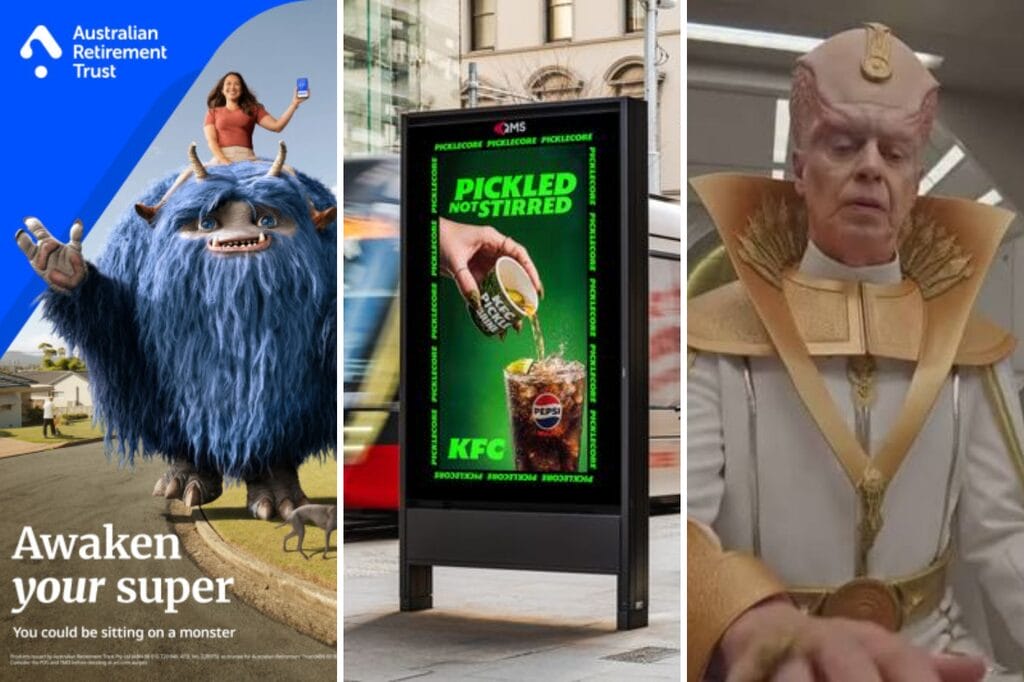
- Australian Retirement Trust took superannuation, surely the least thrilling product in the country, and turned it into a giant blue rideable monster called ARTie.
- KFC Australia binned its own famous red for a month and went pickle green, complete with pickle lipstick, pickle sunglasses and a necklace made of actual pickles.
- Golden decided the holes in a crumpet were mouths. Its creative director described them as “an ensemble of little mouths, each one trained in musical theatre, longing for the delicious topping of their dreams”.
- Bankwest built a campaign on the premise that easy banking frees people up to worry about alien abduction and an unexplained fondness for Tom Selleck.
- Telstra hired Steve Buscemi to play a three-armed alien emperor who keeps failing to scam Australians.
- Rexona asked people at universities and retirement villages what they call their various body parts, then put the answers on billboards.
None of it is an accident. Every one of those ideas was signed off by a grown adult with a mortgage, which is rather the point.
Blandness got expensive
Here is what changed. Everything started to look the same, and generative AI poured petrol on it.
A model works by averaging. It is trained on everything that came before and returns the safest version of it, which is precisely where most advertising was already sitting. Analysts have a name for the result, the “sea of sameness”, and it is visible in the identical blue and black of every streaming service and the characterless sans-serif logos that make whole categories interchangeable.
The uncomfortable part is the arithmetic. Ads in the bottom half for creative distinctiveness need up to 2.6 times more media spend to shift the same volume of product, and LinkedIn’s B2B Institute found 81 per cent of business-to-business ads fail to build any memory at all. Meanwhile Kantar reports humorous ads earn 47 per cent higher brand recall when the joke is tied to the brand, yet the share of ads using humour has slid from 53 per cent to 34 per cent since 2000.
Brands quietly cut the funny, then wondered where the attention went. Bland is not the safe option. Bland is the expensive one.
Australians were always going to enjoy this
This is a nation that has never taken its own advertising terribly seriously. Sam Kekovich has spent twenty years telling everyone off about lamb. A rogue tourism slogan was ruled obscene by the regulator while the Northern Territory quietly banked a 17.5 per cent lift in domestic visitors.
So the current moment is less a new trend than a homecoming. The Research Agency’s most-loved Australian ads of 2026 featured Budget Direct, Allianz, Toyota, Telstra and Youi. The thread tying them together was not budget or gloss. A strong majority of people simply said there were “not many ads like this”.
There is one rule, and it does matter
Silly is not the same as sloppy, which is where the strategy earns its keep.
The work that lasts is the work that stays put. Specsavers has run the same joke for two decades and only got funnier. Repco has been “Bringin’ the Bathurst” for six years. Budget Direct’s Captain Risky became one of the country’s most recognisable branding devices.
Odd works when the oddness has a shape people recognise. Odd for its own sake is just noise with a media budget.
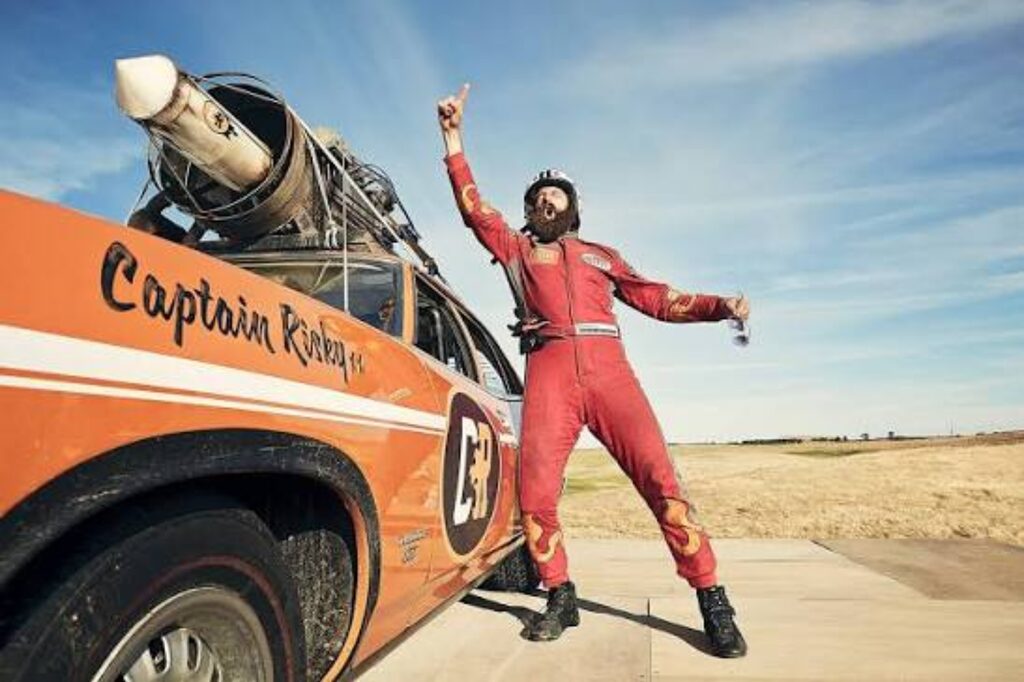
So, are you ready to embrace the weird ad vibe?
Australian ads really are getting weirder, and the brands doing it well are being rewarded for it. In a market drifting towards a machine-made average, sounding like an actual human being has become a competitive advantage.
As Ignite Search marketing specialist Ellen puts it, “Life is no fun without a bit of silliness.” After all, all the best marketers embrace their weirdness flag.
Ignite Search would be delighted to show Australian businesses precisely how silly their advertising can get.
Talk to one of the team today to brainstorm a weird and wonderful classic Australian ad today.